
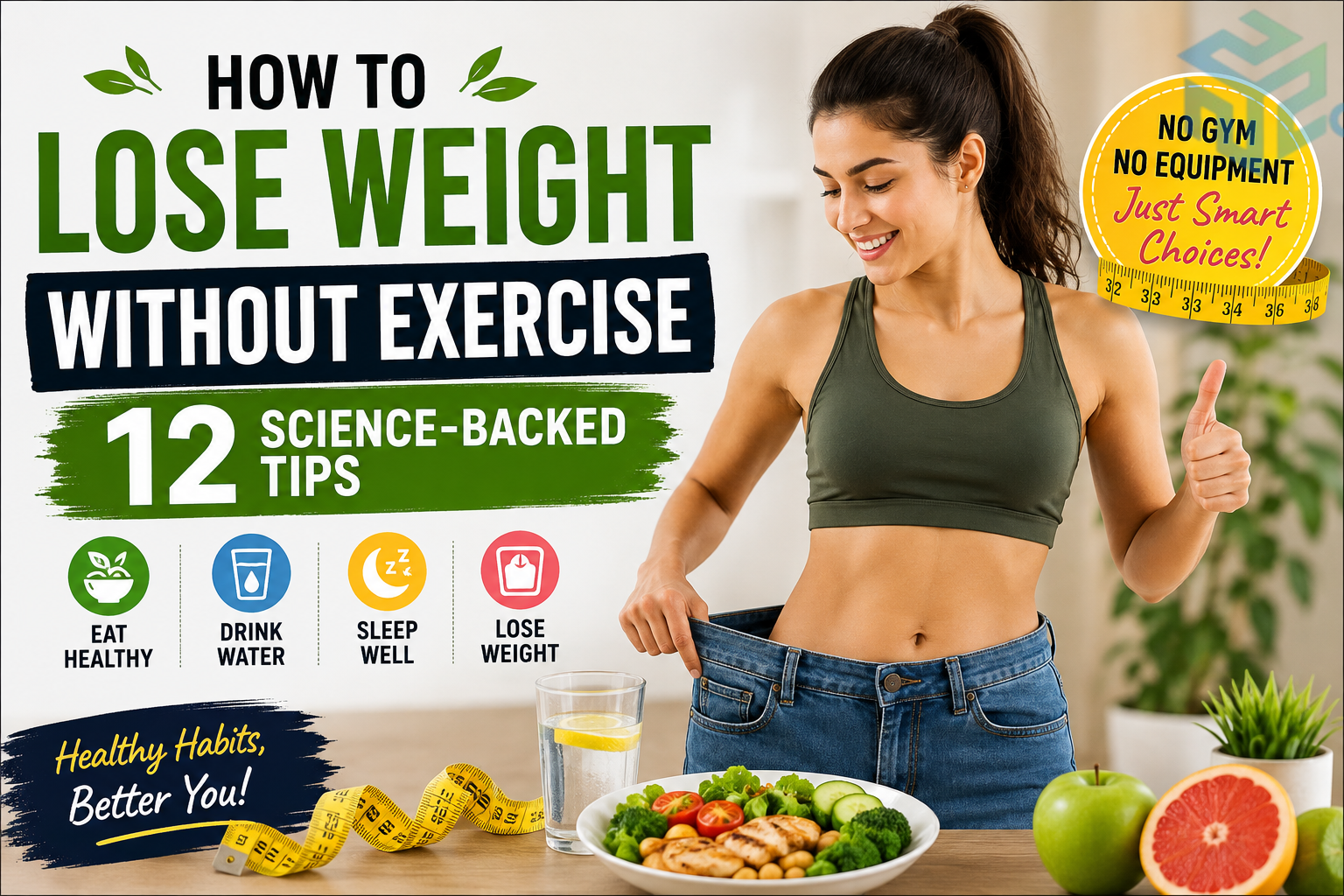
Losing weight is one of the most common health goals, but many people believe they must spend hours at the gym to see results. The truth is that exercise can support weight loss, but it isn’t the only factor that matters. Your daily eating habits, sleep quality, stress levels, and overall lifestyle often have a greater impact on your weight than you might think.
If you have a busy schedule, a medical condition, or simply don’t enjoy working out, there are still practical ways to manage your weight. Small, consistent changes can help you reduce excess calories, improve your metabolism, and build healthier habits over time. Instead of looking for quick fixes, focus on sustainable strategies that fit naturally into your routine.
In this guide, you’ll discover 12 science-backed tips that can help you lose weight without exercise while supporting your overall health.
Can You Really Lose Weight Without Exercise?
Yes, it is possible to lose weight without regular exercise. Weight loss mainly depends on creating a calorie deficit, which means your body uses more energy than it receives from food and drinks. While physical activity helps increase calorie burn, your eating habits usually play the biggest role in achieving and maintaining a healthy weight.
That said, healthy weight loss isn’t about skipping meals or following extreme diets. The goal is to make smarter food choices, control portion sizes, and build habits that you can maintain for the long term.
1- Eat More Protein
Protein is one of the most filling nutrients. It helps reduce hunger, keeps you satisfied for longer, and may naturally lower the number of calories you eat throughout the day.
Including foods such as eggs, fish, chicken, Greek yogurt, beans, lentils, tofu, and lean meat in your meals can support weight management while helping your body maintain muscle mass during weight loss.
2- Control Your Portion Sizes
Many people eat healthy foods but still consume more calories than they realize because their portion sizes are too large. Learning to eat appropriate portions can make a significant difference without forcing you to eliminate your favorite meals.
Using smaller plates, avoiding second servings, and paying attention to hunger cues can help you enjoy your food while preventing overeating.
3- Drink More Water
Drinking enough water throughout the day supports many important body functions and may also help with weight management. Sometimes people mistake thirst for hunger, leading them to snack when their body actually needs fluids.
Having a glass of water before meals may also help you feel fuller, making it easier to avoid overeating during lunch or dinner.
4- Reduce Sugary Drinks
Soft drinks, sweetened coffee, energy drinks, and sugary fruit juices can add hundreds of extra calories without making you feel full. Replacing these beverages with water, sparkling water, or unsweetened tea is a simple way to reduce your daily calorie intake.
Making this one change alone can have a noticeable impact over time, especially if sugary drinks are a regular part of your diet.
5- Get Enough Sleep
Sleep plays an important role in maintaining a healthy weight. Poor sleep can affect hormones that control hunger and appetite, making you feel hungrier and increasing cravings for high-calorie foods.
Most adults benefit from getting around seven to nine hours of quality sleep each night. Improving your sleep routine can support both your physical health and your weight-loss goals.
6- Eat Slowly and Mindfully
Eating too quickly often leads to overeating because your brain needs time to recognize when you’re full. Taking smaller bites, chewing your food thoroughly, and eating without distractions can help you enjoy your meals while naturally reducing calorie intake.
Mindful eating also encourages you to pay attention to your body’s hunger and fullness signals instead of eating out of habit, boredom, or stress.
7- Eat More Fiber
Fiber-rich foods help you feel full for a longer time, making it easier to control your appetite and avoid unnecessary snacking. Unlike highly processed foods, fiber slows digestion and supports a healthy digestive system, which can be beneficial when you’re trying to lose weight.
Good sources of fiber include vegetables, fruits, oats, beans, lentils, whole grains, and seeds. Adding these foods to your daily meals is a simple way to improve your diet without making major changes.
8- Limit Processed Foods
Processed foods are often high in added sugar, unhealthy fats, and extra calories while providing very little nutrition. Regularly eating chips, fast food, sugary snacks, and packaged desserts can make weight management more difficult.
Instead, choose whole foods whenever possible. Fresh vegetables, fruits, lean proteins, whole grains, and healthy fats provide your body with the nutrients it needs while helping you stay satisfied for longer.
9- Manage Your Stress Levels
Stress can affect your eating habits in many ways. Some people eat more when they’re stressed, while others crave sugary or high-calorie comfort foods. Over time, this can lead to unwanted weight gain.
Finding healthy ways to manage stress, such as reading, meditation, deep breathing, spending time outdoors, or talking with friends, may help reduce emotional eating and improve your overall well-being.
10- Avoid Late-Night Snacking
Late-night snacking isn’t always unhealthy, but many people choose foods that are high in calories and low in nutrition. Eating chips, sweets, or fast food before bed can increase your daily calorie intake without providing lasting fullness.
If you genuinely feel hungry at night, choose a healthier option such as Greek yogurt, a piece of fruit, or a handful of nuts instead of highly processed snacks.
11- Plan Your Meals in Advance
Meal planning can help you make healthier food choices throughout the week. When you already know what you’re going to eat, you’re less likely to order fast food or rely on unhealthy convenience meals.
Preparing meals ahead of time also helps control portion sizes, reduces food waste, and makes healthy eating easier even on busy days.
12- Stay Consistent with Healthy Habits
Successful weight loss doesn’t happen overnight. It’s the result of making small, healthy decisions every day. Instead of looking for quick solutions, focus on habits you can maintain for months and years.
Even simple changes like drinking more water, eating more vegetables, sleeping well, and reducing sugary drinks can produce noticeable results when practiced consistently.
How to lose weight fast without exercise at 12?
For a 12-year-old, the focus should never be on rapid weight loss. Children and teenagers are still growing, so the goal should be developing healthy eating habits rather than following strict diets. Eating balanced meals, reducing sugary drinks, limiting processed snacks, and getting enough sleep can support a healthy weight over time. Parents or guardians should always consult a healthcare professional before making major dietary changes for a child.
How to lose 12 kg without exercise?
Losing 12 kg without exercise is possible for some people, but it usually takes time and consistent lifestyle changes. The safest approach is to reduce daily calorie intake by eating nutrient-rich foods, controlling portion sizes, drinking enough water, and avoiding sugary drinks and highly processed foods. Gradual weight loss is generally more sustainable than trying to lose a large amount of weight in a short period.
How to lose 5 kg in 7 days without exercise?
Losing 5 kg in just seven days without exercise is not a realistic or healthy goal for most people. While body weight can fluctuate because of water loss, losing that much body fat in one week is generally not possible. A healthier approach is to focus on balanced nutrition, proper hydration, and consistent lifestyle habits that support steady, long-term weight management instead of quick fixes.
What is the fastest way to lose weight without exercise?
The fastest healthy way to lose weight without exercise is to improve your eating habits rather than relying on extreme diets. Choosing high-protein and high-fiber foods, reducing added sugar, controlling portion sizes, drinking plenty of water, and getting enough sleep can help create a calorie deficit while supporting your overall health. Sustainable changes are more effective than methods that promise rapid results.
Frequently Asked Questions
Can I lose weight without going to the gym?
Yes. A balanced diet, portion control, quality sleep, and healthy lifestyle habits can support weight loss even if you don’t go to the gym.
What foods help with weight loss?
Protein-rich foods, vegetables, fruits, whole grains, beans, and other high-fiber foods can help you stay full and support healthy weight management.
How much water should I drink to lose weight?
Your water needs vary depending on your body and activity level, but staying well hydrated may help control appetite and support overall health.
Is skipping meals a good way to lose weight?
Not necessarily. Skipping meals can increase hunger later in the day and may lead to overeating. A balanced eating pattern is generally easier to maintain.
How long does healthy weight loss take?
Healthy weight loss is gradual. Building sustainable habits is more important than trying to lose weight quickly.
Can poor sleep affect body weight?
Yes. Not getting enough sleep may increase hunger and cravings, making it more difficult to manage your weight.
What is the healthiest way to lose weight?
The healthiest approach combines nutritious eating, good sleep, stress management, and consistent healthy habits. If you have a medical condition or need personalized advice, consult a qualified healthcare professional.
Conclusion
Losing weight without exercise is possible when you focus on healthy eating habits and long-term lifestyle changes. Choosing nutritious foods, controlling portion sizes, drinking enough water, getting quality sleep, and managing stress can all contribute to healthy weight management. Rather than chasing quick results, aim for gradual progress that you can maintain over time. Small daily improvements often lead to lasting success.
