
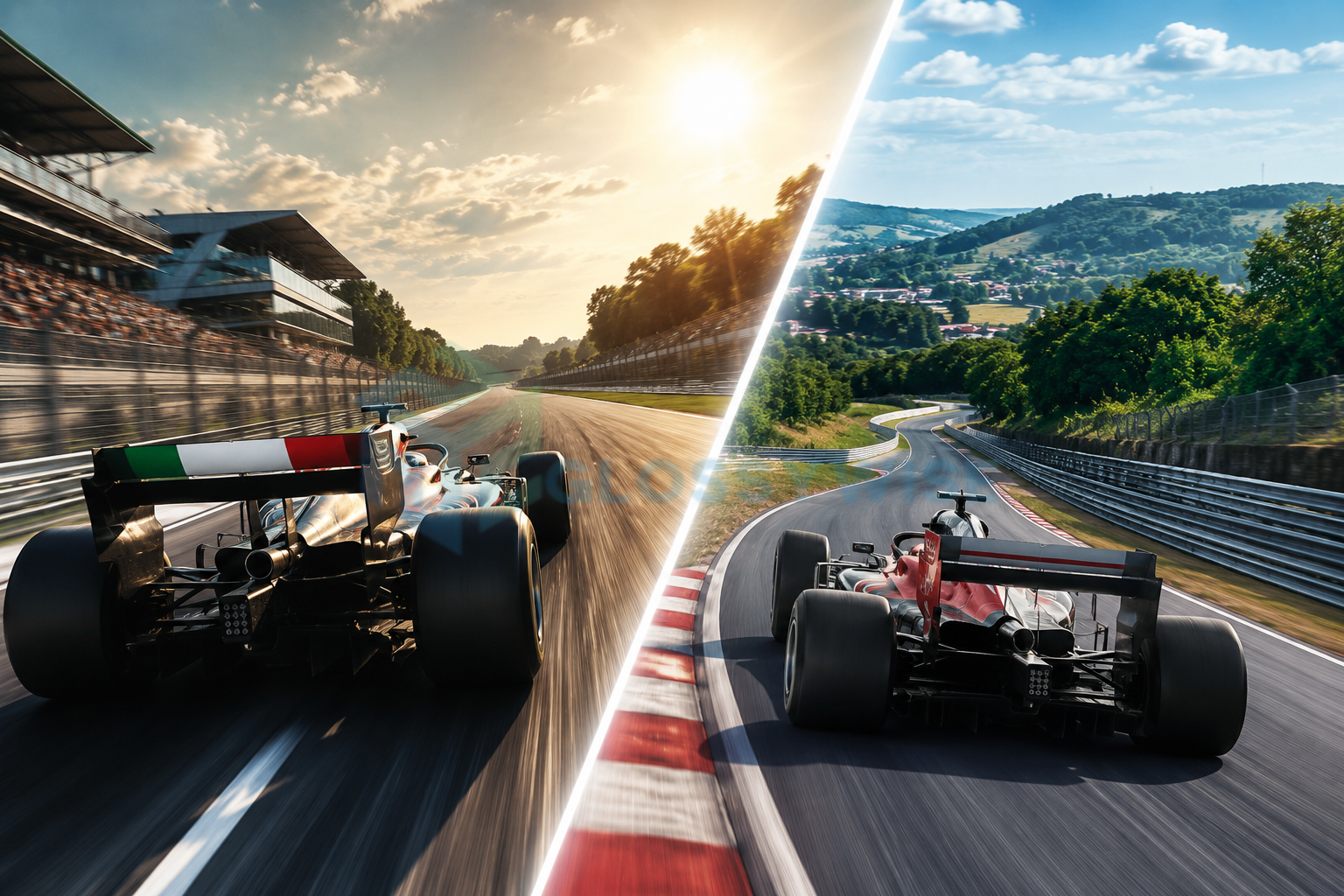
Why Monza Could Be Slower Than the Hungaroring in 2026
Monza has one of the most famous nicknames in Formula 1: the “Temple of Speed.” The Italian circuit is traditionally associated with long straights, low-downforce cars, huge braking zones and some of the highest average speeds seen during an F1 weekend. But Formula 1’s new 2026 technical regulations have created a remarkable paradox. Ahead of the 2026 Italian Grand Prix, McLaren driver Oscar Piastri revealed that his team’s simulator suggested its car could actually reach a higher top speed on the main straight at the Hungaroring than at Monza.
That sounds almost impossible.
The Hungaroring is widely regarded as one of the most technical and slowest circuits on the F1 calendar. Monza, meanwhile, is built around speed. Its long straights and famous corners such as the Lesmo bends, Ascari chicane and Parabolica have historically made it one of the defining high-speed venues in motorsport.
Yet the 2026 Formula 1 cars are facing a completely different technical challenge.
The issue is not simply aerodynamic drag or engine power. It is energy availability.
The new-generation F1 power units place far more emphasis on electrical power than previous hybrid systems. The electrical contribution has increased to roughly half of the power unit’s output, while the MGU-K can deliver up to 350kW.
At a circuit like Monza, that creates a strange problem: cars have plenty of places to spend electrical energy, but comparatively few places to recover it.
That is why the Temple of Speed could produce a very different kind of speed in 2026.
Is Monza the Fastest F1 Track?
Monza is generally considered one of the fastest F1 tracks in the world, but calling it the single fastest circuit depends on how speed is measured.
There are several ways to define the fastest F1 track:
- Highest average lap speed
- Highest recorded top speed
- Fastest lap time
- Greatest percentage of full-throttle running
- Fastest overall circuit layout
By most of these measures, Monza is among the leading candidates.
The circuit has long straights, relatively few corners and several sections where drivers remain at full throttle for extended periods. Its low-downforce setup also allows cars to reach very high speeds before braking for the first chicane, the Variante della Roggia and the Ascari chicane.
Monza’s average lap speed has historically been among the highest on the Formula 1 calendar. The circuit is also famous for producing some of the fastest qualifying laps in terms of average speed.
However, Monza is not always the fastest track in every category.
A circuit such as Spa-Francorchamps can also produce extremely high average speeds because of sections such as Eau Rouge and Kemmel Straight. Jeddah Corniche Circuit is another very fast venue, with long flat-out sections and high-speed corners.
In 2026, the answer becomes even more complicated because electrical energy management affects top speed. A car may have a low-drag aerodynamic setup but still lose acceleration if its electrical deployment runs out before the end of a straight.
Therefore, Monza remains one of the fastest F1 tracks overall, but the fastest peak speed on a particular straight can vary depending on the car, setup, battery state and regulations.
Which F1 Track Is Called the Temple of Speed?
Monza is the F1 track known as the “Temple of Speed.”
The official Italian name of the circuit is Autodromo Nazionale Monza, and it is located near Milan in Italy. Monza earned its famous nickname because of its long straights, high-speed corners, low-downforce configurations and exceptionally high average lap speeds.
The circuit has been part of Formula 1 since the championship’s first season in 1950, apart from the 1980 Italian Grand Prix, which was held at Imola while Monza underwent improvements.
Monza’s identity is closely connected to speed and Ferrari. The Italian Grand Prix attracts huge crowds of passionate Ferrari supporters, known as the Tifosi. The atmosphere at Monza is one of the most distinctive in motorsport, especially when a Ferrari driver performs well.
The circuit’s most famous sections include:
- The Rettifilo Tribune straight
- Variante del Rettifilo
- Curva Grande
- Variante della Roggia
- The Lesmo corners
- The Ascari chicane
- The Curva Alboreto, formerly known as Parabolica
Although the track has been modified several times, its central character has remained the same: low drag, high speed and heavy braking.
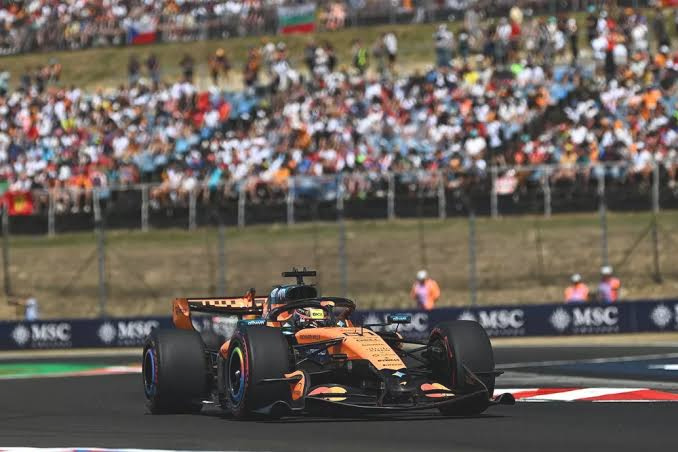
Oscar Piastri Reveals a Surprising Monza Simulation Result
The biggest talking point ahead of the Italian Grand Prix came from Oscar Piastri.
The McLaren driver explained that simulations conducted by his team suggested the car could actually be quicker on the main straight at the Hungaroring than at Monza.
Piastri acknowledged that the comparison sounds strange because the Hungaroring has a much slower and twistier layout.
However, the difference comes down to how the 2026 car uses electrical energy.
At Monza, the car can accelerate for long periods, but the battery cannot simply provide maximum electrical assistance indefinitely. Once the available energy has been used, the electric contribution begins to taper away.
At Hungary, the layout gives the car more opportunities to recover and reuse electrical energy.
That means the slower circuit can, under certain conditions, allow the car to maintain electrical assistance for longer on a straight.
Piastri described Monza as a circuit where the teams face a problem whichever direction they choose.
If the cars were allowed to harvest substantially more energy, they would have another problem: super clipping.
If the harvesting limit is reduced, however, there is less energy available to deploy down the straights.
That is the fundamental paradox behind the unusual Monza speed situation.
Why Monza Is So Difficult for the 2026 F1 Cars
The basic problem can be understood by looking at the layout of Monza.
The circuit is extremely fast and contains several long periods of full-throttle running.
Drivers spend approximately 76% of a lap at full throttle at Monza. The track is 5.793km long and the race covers 53 laps.
That makes Monza ideal for conventional engine performance.
But the 2026 power unit is not simply a conventional engine.
The new regulations have shifted the balance of the power unit dramatically toward electrical energy. The MGU-K’s maximum electrical output has risen from 120kW to 350kW, while the overall concept targets roughly a 50-50 split between combustion and electrical power.
This makes energy management one of the most important parts of performance.
Every time a driver accelerates down a straight, electrical energy can be consumed.
Every time the car brakes, some of that energy can be recovered.
The problem at Monza is that there are long sections where the car is accelerating or travelling at high speed but relatively few opportunities to recharge the battery.
In simple terms:
Lots of energy is being spent, but not enough energy is being recovered.
That creates an energy shortage toward the end of the straights.
The 2026 F1 Power Unit Changes Everything
To understand the Monza problem, it is important to understand what changed for Formula 1 in 2026.
The basic 1.6-litre V6 turbocharged internal-combustion engine remains, but its role has changed considerably.
The MGU-H has been removed.
At the same time, the MGU-K has become dramatically more powerful.
The electrical system can now provide up to 350kW, compared with 120kW under the previous generation. Formula 1 describes the new setup as approximately a 50-50 split between internal-combustion and electrical power.
That change was designed to make the power unit more efficient, more relevant to road-car technology and more attractive to manufacturers.
But it also means drivers and teams must think differently about every lap.
Energy can be:
- Recovered under braking
- Recovered through controlled lift-off
- Recovered through part-throttle operation
- Recovered through permitted “super clipping”
- Stored in the battery
- Deployed through the MGU-K
- Used strategically for overtaking and defending
At most circuits, this creates an additional tactical layer.
At Monza, it becomes a central performance limitation.
What Is the 5MJ Harvesting Limit?
One of the most important technical details for the 2026 Italian Grand Prix is the energy-harvesting limit.
For Monza qualifying, the FIA has reduced the maximum permitted recharge to 5 megajoules per lap.
That is particularly significant because Monza is so energy-starved.
The purpose is not simply to slow the cars.
Instead, the FIA is trying to prevent another unwanted consequence of the new regulations: excessive energy harvesting on straights.
If cars were allowed to harvest unlimited or very large amounts of energy, they could use the MGU-K in reverse while travelling at full throttle.
That creates the phenomenon known as super clipping.
The FIA has adjusted energy-management parameters during the 2026 season partly to reduce this effect and keep cars driving more consistently at full speed. Earlier changes reduced maximum permitted recharge and targeted shorter super-clip periods.
At Monza, the challenge is particularly severe because braking alone does not provide enough opportunity to recover all the energy the cars would like to use.
The result is a compromise.
The FIA reduces the harvesting limit to avoid excessive clipping, but that also means there is less energy available to deploy later.
Important: Is the 5MJ Limit for the Whole Monza Race?
Not exactly.
This is an important distinction when discussing the 2026 Italian Grand Prix.
The 5MJ figure applies to qualifying at Monza.
For the race, the harvesting allowance is higher, with the weekend’s race configuration using a 7MJ limit, while the overtaking system can provide an additional energy opportunity under the relevant conditions.
This difference matters because qualifying and race performance are not identical.
In qualifying, a driver wants maximum performance over a single lap.
In the race, teams have to consider:
- Battery state
- Overtaking
- Defending
- Traffic
- Tyre degradation
- Fuel consumption
- Multiple consecutive laps
- Energy recovery
- Strategic deployment
The race could therefore produce a very different energy-management picture from qualifying.
What Exactly Is Super Clipping in F1?
The term super clipping has become one of the defining pieces of Formula 1 terminology in 2026.
In simple terms, super clipping happens when the MGU-K starts harvesting electrical energy while the car is still travelling at full throttle or near full throttle.
Instead of continuing to receive maximum electrical assistance, the car begins converting some of its kinetic energy back into electrical energy.
That can cause the car to stop accelerating as strongly or even lose speed before reaching the conventional braking point.
This is especially noticeable on long straights.
Imagine a driver accelerating toward the end of Monza’s main straight.
Under normal circumstances, the car would continue accelerating until the driver brakes for the first chicane.
But if the battery needs to be recharged and the system begins harvesting energy, the driver can experience a reduction in performance before the braking zone.
That is super clipping.
Piastri suggested that if the energy-harvesting limit were higher at Monza, cars could experience much more extreme clipping, potentially losing 30 to 40km/h toward the end of straights.
The lower harvesting limit therefore helps prevent the most extreme version of the problem.
But it creates another problem.
There is simply less energy available for deployment.
Why More Energy Would Not Automatically Make Monza Faster
This is the most interesting part of the Monza puzzle.
It might seem obvious that the solution is simply to give the cars more electrical energy.
But that does not work perfectly.
If teams were given significantly more energy to deploy, they would eventually need to recover that energy.
Monza does not offer enough suitable opportunities to recharge the battery naturally through braking.
That means teams would have to use more aggressive energy harvesting on the straights.
And that brings super clipping back into the picture.
So the problem becomes a loop:
More harvesting → more available energy → more deployment → but more clipping.
Or:
Less harvesting → less clipping → but less energy available for the straights.
That is why Piastri described the situation as a problem “no matter which direction you go.”
It is a unique consequence of combining a highly energy-demanding circuit with a power unit that relies much more heavily on electricity.
Why the Hungaroring Can Be Faster on a Straight
The Hungaroring is almost the opposite of Monza.
Instead of long straights dominating the lap, the Budapest circuit contains numerous corners and relatively short acceleration zones.
At first glance, that should make it much slower.
But corners create braking events.
Braking events create opportunities to recover energy.
That recovered energy can then be deployed again.
This creates a more balanced energy cycle.
At Monza, the driver may spend a large amount of electrical energy accelerating down one straight, only to have limited opportunities to replenish it before the next long acceleration zone.
At Hungary, the repeated sequence of:
Brake → recover → corner → accelerate → deploy
can be more favorable to the hybrid system.
That does not mean the Hungaroring is actually a faster circuit overall.
It means that a particular straight-line speed measurement can be higher there under certain 2026 energy conditions.
This distinction is extremely important.
Which F1 Track Is Considered the Slowest?
The Hungaroring is commonly considered the slowest F1 track on the current calendar in terms of average speed.
Located near Budapest, Hungary, the circuit is known for its tight, technical layout and limited long straights. It has often been compared with a permanent street circuit because drivers must constantly change direction and manage a large number of corners.
The Hungaroring is approximately 4.381km long and features 14 corners. Its layout places a strong emphasis on:
- Mechanical grip
- Aerodynamic downforce
- Slow-speed traction
- Precise braking
- Tyre management
- Qualifying performance
The circuit’s average speed is much lower than Monza’s because cars spend less time at full throttle and more time cornering.
The Hungaroring is not necessarily the slowest track in every single sector or speed trap. Monaco, for example, is famous for its extremely low average speed and narrow street layout. However, Monaco is also a special case because it is a temporary street circuit with unique restrictions.
When fans and analysts discuss the slowest permanent F1 circuit, the Hungaroring is usually one of the first names mentioned.
This is what makes Piastri’s Monza simulation result so surprising. A circuit known for being slow overall could potentially produce a higher speed on a particular straight because its corners allow the car to recover more electrical energy.
Is Monaco Slower Than the Hungaroring?
Monaco is often considered the slowest F1 circuit when looking at average lap speed and overall track character.
The Monaco Grand Prix takes place on narrow public roads through Monte Carlo and La Condamine. The circuit has tight corners, limited run-off areas and very little room for error.
Its most famous slow sections include:
- The Loews Hairpin
- Portier
- The Nouvelle Chicane
- Rascasse
- Anthony Noghes
Monaco’s average speed is usually lower than that of the Hungaroring, but comparing the two circuits is not always straightforward.
Monaco’s layout is unique. It has a very short lap, extremely narrow track sections and a much greater emphasis on qualifying position. Overtaking is difficult, and the race often depends heavily on strategy, safety cars and track position.
The Hungaroring is also slow and technical, but it is a more conventional permanent circuit with wider racing areas and more opportunities for overtaking.
Therefore:
- Monaco is often described as the slowest F1 circuit by average speed.
- The Hungaroring is commonly considered the slowest permanent-style circuit on the calendar.
Both circuits are much slower than Monza, Spa-Francorchamps, Silverstone or Jeddah.
Why Is the Ferrari F1 So Slow?
The question “Why is the Ferrari F1 so slow?” usually refers to periods when Ferrari’s Formula 1 car appears slower than expected compared with Red Bull, Mercedes, McLaren or another rival.
The answer is rarely one single problem.
A Ferrari F1 car can look slow for several different reasons, including:
- Poor aerodynamic efficiency
- Excessive drag
- Weak tyre management
- Poor low-speed traction
- Difficult balance
- Power-unit limitations
- Inefficient energy deployment
- Setup compromises
- Driver confidence
- Circuit characteristics
- Reliability or engine-saving modes
It is also important to remember that Ferrari is not permanently slow. The team’s performance changes from circuit to circuit and season to season.
A car may be competitive at Monza because of its straight-line efficiency but struggle at the Hungaroring because it lacks downforce or traction. Another Ferrari design may be strong in high-speed corners but difficult to drive in slow corners.
Aerodynamic efficiency
One of the biggest reasons a Ferrari can look slow is an aerodynamic compromise.
If the car produces too much drag, it loses speed on straights.
If the team removes too much downforce to improve straight-line speed, the car may become slower through corners and harder to control.
The ideal setup depends on the circuit.
At Monza, Ferrari may choose a low-downforce configuration to maximize speed on the straights. At a circuit such as Monaco or Hungary, the team needs much more downforce, which can expose weaknesses in cornering performance.
Tyre management
A car can be fast over one qualifying lap but slow during a race if it damages or overheats its tyres.
Ferrari has sometimes struggled to maintain tyre performance over long stints. When the tyres overheat, the driver must reduce speed, especially through corners and during acceleration.
This can make the car appear slow even if its peak qualifying pace is competitive.
Power-unit performance
The Ferrari power unit is one of the most important parts of the car’s performance.
Engine power affects acceleration, top speed and energy deployment. If Ferrari runs a conservative engine mode because of reliability concerns, the car may lose performance on the straights.
In the 2026 regulations, the electrical side of the power unit is equally important. A Ferrari may have strong combustion power but still lose time if its battery deployment or energy recovery is less efficient than a rival’s.
Car balance
Drivers need confidence in the front and rear of the car.
If the front end does not respond properly, the driver cannot carry enough speed into corners. If the rear is unstable, the driver must be cautious on corner exits.
Small balance problems can cost time throughout an entire lap.
Circuit-specific weaknesses
Formula 1 cars are not equally strong everywhere.
A Ferrari may be quick at Monza because the circuit rewards straight-line efficiency and braking stability. The same car may struggle at the Hungaroring because the track demands sustained downforce and strong traction.
That is why it is better to ask, “Why is Ferrari slow at this circuit?” rather than assuming Ferrari is always slow.
Ferrari’s race pace versus qualifying pace
Ferrari can also look fast in qualifying but less competitive in the race.
A qualifying lap uses maximum engine power, fresh tyres and a low fuel load. Race performance depends on tyre degradation, fuel weight, traffic, battery management and consistency.
If Ferrari’s qualifying pace is strong but its race pace is weak, the problem may be tyre wear or energy management rather than outright engine performance.
Why Ferrari Can Be Slow Even at Monza
Monza is Ferrari’s home circuit, but that does not guarantee Ferrari will always be the fastest team there.
The track rewards a very specific combination of characteristics:
- Low aerodynamic drag
- Strong acceleration
- Efficient energy deployment
- Stable braking
- Good traction
- Confidence over kerbs
- Effective slipstream performance
If Ferrari lacks one of these areas, it can lose time despite having a powerful engine.
For example, a Ferrari may have excellent top speed but lose time through the Lesmo corners or Ascari. Another car may be slightly slower on the straight but gain enough time in the corners to set a faster lap.
This is why speed traps alone do not tell the complete story.
A car’s total lap time depends on how efficiently it combines straight-line speed, braking and cornering.
Monza Is Still One of F1’s Fastest Circuits
Despite the unusual energy problem, Monza has not suddenly become a slow circuit.
The track remains one of Formula 1’s fastest venues.
The official F1 circuit information lists Monza at 5.793km, with 11 corners and a 53-lap race. The current F1 lap record listed for the circuit is Lando Norris’ 1:20.901 from 2025.
The 2026 Italian Grand Prix is also the 77th edition of the event within the Formula 1 World Championship and the 76th to be held at Monza itself.
The circuit’s character has not changed.
The technology has.
That is the important point.
Monza still has:
- Long straights
- Low-downforce setups
- Heavy braking zones
- High-speed corners
- High average speeds
- Slipstream battles
- Major overtaking opportunities
But the way cars generate and maintain speed has changed dramatically.
McLaren’s Low-Drag H-Wing Adds Another Layer
McLaren has also been preparing specifically for the unique requirements of Monza.
The team brought a low-drag H-wing configuration to the Italian Grand Prix weekend.
The purpose of such a configuration is to reduce aerodynamic drag and improve straight-line efficiency.
Normally, this would be exactly what a team wants at Monza.
Less drag means the car can accelerate more efficiently and achieve a higher terminal speed.
But aerodynamic efficiency cannot completely solve an energy shortage.
If the electric system runs out of deployable energy before the end of a straight, a low-drag configuration can only do so much.
This is another reason Piastri’s simulator result is so interesting.
Even with McLaren preparing a low-drag setup, the team’s simulations still suggested the car could be faster on the Hungaroring straight.
That demonstrates just how important the electrical side of the 2026 power unit has become.
How Energy Management Could Change Overtaking at Monza
Energy management could also make the racing itself more complicated.
Traditionally, Monza has been one of the easiest circuits on the calendar for fans to understand from an overtaking perspective.
A driver gets a slipstream, uses DRS in previous generations, brakes late and attempts to pass into the first chicane.
The 2026 cars add another layer.
Drivers now have additional energy-management tools and an overtaking system designed to provide a performance boost.
Formula 1’s 2026 regulations introduced new systems allowing drivers to use electrical energy more strategically during battles. The following car can receive an MGU-K Override advantage under specified conditions, providing additional electrical deployment.
That could make energy state almost as important as aerodynamic position.
A driver may be faster approaching one straight but slower approaching the next because the battery has been depleted.
That can produce what some observers have described as “yo-yo racing.”
One car attacks.
The attacking driver uses energy.
The defending driver responds.
The attacker may then run low on electrical energy.
The balance changes again.
At Monza, where several major straights arrive in succession, this could become particularly dramatic.
Why Oscar Piastri Expects a Chaotic Race
Piastri has suggested that the 2026 Italian Grand Prix could be chaotic, particularly at the beginning.
That prediction makes sense when the energy characteristics of the circuit are considered.
At the start of the race, drivers will have to decide where to use their electrical reserves.
There are multiple opportunities to attack.
A driver could deploy energy on the main straight.
But using too much energy there could leave the car vulnerable later.
Alternatively, a driver could save energy and sacrifice a small amount of performance early in the lap to have a stronger battery state for a later attack.
That creates several possible strategies.
Drivers may have different energy states even when their cars have similar aerodynamic performance.
One driver could be faster into Turn 1.
Another could be faster toward the end of the next straight.
A third could have enough energy to attack late in the lap.
This makes the race less predictable.
Piastri therefore expects the racing to be particularly eventful because of the number of places where electrical energy can be deployed.
What Could Happen During Qualifying?
Qualifying could be particularly fascinating because the energy limit is tighter.
The 5MJ harvesting limit means teams must carefully prepare the battery state for the most important parts of the lap.
A driver cannot simply harvest as much energy as possible whenever the car is travelling quickly.
Engineers have to decide where energy recovery makes the most sense.
The timing of deployment also becomes important.
Using too much electrical power too early could leave the car without sufficient assistance later.
Saving too much energy, meanwhile, could mean leaving lap time on the table.
The ideal qualifying lap therefore requires much more than simply driving as quickly as possible.
It requires the driver and engineer to optimize:
- Energy deployment
- Energy recovery
- Throttle application
- Braking
- Aerodynamic configuration
- Battery state
- Overtaking preparation
- Corner exits
This is a major change in the character of modern F1.
The 2026 Italian Grand Prix Is a Major Test for the New Rules
The Monza weekend represents an important real-world test for Formula 1’s 2026 regulations.
The new rules were designed to produce lighter, more agile cars, greater electrical involvement and improved racing.
But every circuit exposes different strengths and weaknesses.
A technical circuit can provide many opportunities for energy recovery.
A high-speed circuit can consume energy rapidly.
Monza is therefore an extreme test.
The 2026 Italian Grand Prix is scheduled for September 4-6, with practice on Friday, qualifying on Saturday and the race on Sunday.
That means fans are about to see how simulator predictions translate into real-world track data.
The first practice sessions will be particularly useful because teams can compare their expected energy usage with actual battery behavior.
Early Practice Shows Monza Is Still Extremely Competitive
The first practice session at Monza provided another reminder that outright performance remains very competitive.
Charles Leclerc led a Ferrari one-two in FP1, setting a 1:23.008 ahead of Lewis Hamilton, while George Russell was third.
The second practice session then saw Russell move to the top with a 1:22.559, 0.120 seconds ahead of Leclerc, with Kimi Antonelli third.
These early times do not directly disprove Piastri’s energy prediction.
The key issue is that lap time and peak speed are not the same thing.
A car can be extremely quick over a complete lap while having a lower maximum speed than expected because it gains time elsewhere through braking, cornering, traction or energy efficiency.
That distinction will become increasingly important in 2026.
Could Lower Top Speed Actually Produce Better Racing?
There is an interesting possibility that lower peak speeds could improve the spectacle.
If all drivers have to manage limited electrical energy, overtaking may depend on timing rather than simply having the highest top speed.
Drivers could spend energy differently.
One driver may attack aggressively.
Another may conserve energy.
A third may try to stay within the slipstream and wait for a better opportunity.
The result could be multiple changes of position.
Slipstreaming and the new energy systems could make the passing and repassing battle particularly important at Monza.
However, there is also a downside.
If drivers are forced to reduce power too dramatically at the end of straights, the spectacle could feel artificial.
That is one reason the FIA has tried to control the amount of super clipping rather than allowing it to dominate the lap.
What Does This Mean for F1 Top Speed in 2026?
The biggest lesson from Monza is that top speed is no longer simply a measure of engine power and aerodynamic drag.
In previous eras, a team could focus heavily on reducing drag and maximizing engine performance to achieve a strong top-speed figure.
In 2026, teams also have to ask:
How much electrical energy will still be available when the car reaches the end of the straight?
That question changes everything.
A car with excellent aerodynamic efficiency may still struggle if its electrical assistance runs out early.
Conversely, a car with a more efficient energy strategy may maintain stronger acceleration deeper into the straight.
Therefore, peak speed could become an increasingly complicated performance metric.
Engineers will need to analyze not only the final speed but also:
- Where electrical deployment ends
- How quickly the battery is depleted
- How much energy is recovered
- How much super clipping occurs
- How much time is lost through energy conservation
- How energy is distributed between straights
Monza vs Hungaroring: What Is Really Being Compared?
It is important not to interpret Piastri’s comment as saying that the Hungaroring has suddenly become a faster circuit than Monza.
That is not what the simulation result means.
Instead, it means that the peak speed on a particular straight can be higher at Hungary under the 2026 energy-management rules.
The two circuits remain fundamentally different.
Monza
- 5.793km
- 11 corners
- Long straights
- Low-downforce setup
- Very high full-throttle percentage
- Major braking zones
- Severe electrical energy demand
Hungaroring
- Tight and technical layout
- Many corners
- More frequent braking
- More opportunities to recover electrical energy
- Less emphasis on traditional top-speed performance
So the comparison is less about which circuit is faster overall and more about how the new power units interact with different track layouts.
Why the 2026 F1 Cars Could Change the Meaning of “Temple of Speed”
Monza’s nickname will not disappear.
The circuit will remain the Temple of Speed because of its history, layout and unique driving challenge.
But 2026 could change what fans actually see when the cars run there.
Instead of simply watching drivers chase the highest possible speed, fans will be watching an additional invisible battle inside every car.
That battle is between:
energy consumption and energy recovery.
Every acceleration uses energy.
Every braking zone creates an opportunity to recover energy.
Every straight creates a deployment decision.
Every battery-management decision can affect the next corner and the next straight.
That makes Monza one of the most revealing circuits for understanding the new generation of Formula 1.
What Fans Should Watch During the Italian Grand Prix
There are several things worth watching closely during the 2026 Italian Grand Prix.
Battery deployment
Pay attention to how long cars maintain electrical assistance down the straights.
End-of-straight speed
The most interesting part may not be the highest speed recorded, but when the electrical assistance begins to fade.
Slipstream battles
Cars could gain major benefits from following another car closely.
Overtake Mode
The new electrical overtaking tools could be especially powerful at Monza.
Super clipping
Watch for cars that appear to stop accelerating unusually early on a straight.
Energy differences
Drivers running similar cars could show different performance depending on their battery state.
First-lap strategy
The opening lap could be especially aggressive as drivers decide how much energy to spend immediately.
Final Verdict: Could Monza Really Be Slower Than Hungary?
Yes — in terms of peak straight-line speed, under certain 2026 energy-management conditions, it is entirely possible.
That does not mean the Hungaroring is faster than Monza as a circuit.
It means Formula 1’s new power-unit architecture has introduced a new limitation that changes the relationship between track layout and top speed.
Monza’s long straights are normally its greatest advantage.
In 2026, they can also be its greatest weakness.
The cars spend huge amounts of electrical energy accelerating, while the circuit provides relatively few opportunities to recover that energy. The FIA has therefore introduced a lower harvesting limit for Monza qualifying to prevent excessive super clipping. But that solution also means less energy can be deployed on the straights.
The result is the strange possibility identified by Oscar Piastri: a McLaren that can be quicker on the main straight at the slower Hungaroring than at the legendary Temple of Speed.
FAQs About Monza F1 2026 and the Temple of Speed
Is Monza the fastest F1 track?
Monza is generally considered one of the fastest F1 tracks because it produces very high average speeds, has long straights and requires low-downforce setups. However, the answer depends on whether speed is measured by average lap speed, top speed or lap time. Spa-Francorchamps and Jeddah can also be extremely fast.
Which F1 track is considered the slowest?
Monaco is often considered the slowest F1 circuit by average speed because of its narrow street layout and tight corners. The Hungaroring is commonly regarded as the slowest permanent-style circuit on the calendar.
Why is the Ferrari F1 car so slow?
A Ferrari F1 car can look slow because of aerodynamic drag, poor tyre management, weak traction, an unstable balance, conservative engine settings or inefficient energy deployment. Ferrari’s performance also changes from circuit to circuit, so a car may be strong at Monza but struggle at the Hungaroring.
Which F1 track is called the Temple of Speed?
Monza in Italy is known as the Temple of Speed because of its long straights, high-speed corners, low-downforce setups and historically high average lap speeds.
Could Monza really have a lower top speed than the Hungaroring?
Yes. Oscar Piastri said McLaren’s simulator work indicated that its car could be quicker on the main straight at the Hungaroring than at Monza because of the amount of electrical energy available for deployment.
Why is Monza so difficult for 2026 F1 cars?
Monza has long straights and a high percentage of full-throttle running, which rapidly consumes electrical energy. At the same time, there are fewer opportunities to recover energy compared with a more technical circuit such as the Hungaroring.
What is the 5MJ rule at Monza?
The FIA has set a 5MJ maximum recharge limit for qualifying at Monza. The race uses a higher energy-recovery allowance, with the race limit set at 7MJ under the current weekend configuration.
What is super clipping in F1?
Super clipping occurs when the MGU-K harvests electrical energy while the car is still travelling at full throttle. The process can reduce acceleration or cause the car to lose speed before the normal braking zone.
Why doesn’t the FIA simply allow more energy harvesting?
Allowing more harvesting could create excessive super clipping. Drivers could be forced to harvest energy on long straights, potentially losing significant speed before braking. The FIA’s limits are intended to balance energy recovery with maintaining more natural high-speed running.
How much electrical power do 2026 F1 cars have?
The 2026 MGU-K can deliver up to 350kW of electrical power, compared with 120kW from the previous generation. The new power units are designed around an approximately 50-50 balance between internal-combustion and electrical power.
Will energy management affect overtaking at Monza?
Yes. Energy deployment can affect acceleration and straight-line performance, while the 2026 regulations introduce additional electrical tools designed to improve overtaking opportunities. Drivers therefore need to decide when to use their energy rather than simply deploying everything immediately.
Is the Hungaroring actually faster than Monza?
No. Monza remains one of the fastest circuits in Formula 1. The comparison relates specifically to potential peak speeds on straights under the 2026 energy rules, not overall lap speed or circuit classification.
Why could the 2026 Italian Grand Prix be chaotic?
The combination of limited electrical energy, multiple straights, overtaking opportunities and different deployment strategies could create significant variations in performance between drivers. Oscar Piastri has predicted that the racing could be particularly chaotic.
When is the 2026 Italian Grand Prix?
The 2026 Italian Grand Prix takes place at Monza from September 4-6, with practice on Friday, qualifying on Saturday and the race on Sunday, September 6.
Who currently holds the Monza F1 lap record?
The official F1 circuit information lists Lando Norris as the holder of the current fastest lap at Monza, with a 1:20.901 set in 2025.
Conclusion
Monza remains Formula 1’s Temple of Speed, but the 2026 regulations are forcing fans to rethink what speed actually means. The circuit’s long straights, traditionally its greatest strength, have created an unusual energy-management challenge for the new generation of F1 cars. With electrical power accounting for roughly half of the power unit’s output and the MGU-K capable of delivering 350kW, the cars can consume electrical energy extremely quickly on Monza’s long full-throttle sections. The problem is that Monza does not offer enough opportunities to recover that energy naturally. The FIA has responded by reducing the qualifying harvesting limit to 5MJ, helping prevent excessive super clipping. But the trade-off is that drivers have less electrical energy available to deploy later on the straights. That is why Oscar Piastri’s simulator discovery is so fascinating. The possibility that a 2026 F1 car could reach a higher peak speed on the Hungaroring’s main straight than at Monza sounds completely backwards. Yet under the new energy-management system, it makes technical sense. Monza is still one of the fastest F1 tracks, while the Hungaroring and Monaco remain among the slowest. Ferrari’s performance, meanwhile, depends on a combination of aerodynamics, tyres, power-unit efficiency, setup and circuit characteristics rather than one simple weakness. The 2026 Italian Grand Prix will therefore be about much more than horsepower and aerodynamic drag. It will be a test of battery management, energy recovery, deployment strategy, slipstreaming and driver decision-making. And if Piastri’s prediction proves accurate during the weekend, Monza may give Formula 1 fans one of the clearest demonstrations yet of how dramatically the sport’s new power-unit regulations have changed the meaning of speed.
