
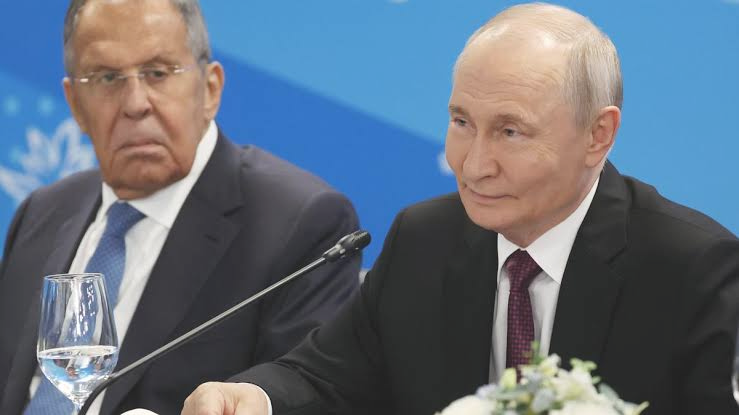
Russia to Close German Cultural Centres After Leipzig Airport Dispute
Russia has announced plans to close German Goethe-Institut centres in response to Germany’s decision to shut down Russian diplomatic and cultural facilities following an alleged drone plot at Leipzig/Halle Airport.
The latest move marks another sharp escalation in relations between Moscow and Berlin, which have already deteriorated significantly since Russia’s full-scale invasion of Ukraine.
Russian Foreign Minister Sergei Lavrov announced on September 3 that Goethe-Institut facilities in Moscow, St. Petersburg and Yekaterinburg would be affected. The announcement followed Germany’s decision to terminate the lease of the Russian House cultural centre in Berlin and close the Russian Consulate General in Bonn on September 18.
The dispute began after German authorities discovered a drone carrying explosives at Leipzig/Halle Airport on August 4, 2026. The device was reportedly found near a Ukrainian cargo aircraft and was later defused.
Germany has linked the incident to Russia and described it as part of a wider campaign of hybrid attacks against European countries. Moscow has rejected the accusation and accused Berlin of using the incident to justify politically motivated action.
The confrontation is significant because it has expanded beyond traditional diplomatic disputes. Cultural institutions, language education, academic cooperation and people-to-people contact are now directly affected.
What Happened at Leipzig/Halle Airport?
The diplomatic crisis centres on an incident at Leipzig/Halle Airport in Germany on August 4, 2026.
German authorities discovered an unmanned drone in a restricted area of the airport. Reports said the device was carrying explosives and was located near a Ukrainian cargo aircraft.
The drone was subsequently defused.
Leipzig/Halle is one of Germany’s most important freight and logistics hubs. Its links to international cargo operations and Ukraine made the incident particularly sensitive.
German authorities initially provided limited information because the investigation was still underway. On August 5, the federal government confirmed that a drone had been found at the airport but said officials could not yet disclose detailed findings.
As the investigation continued, German officials increasingly connected the incident to Russian activity.
By September 1, Berlin publicly attributed responsibility for the attempted attack to Moscow and announced a series of measures against Russia.
Germany has presented the incident as part of a broader pattern of suspected sabotage, espionage and hybrid operations across Europe.
Russia strongly disputes that interpretation.
Why Did Germany Blame Russia?
Germany’s accusation is at the centre of the current diplomatic confrontation.
Berlin has argued that the Leipzig incident resembles other suspected Russian operations involving sabotage, disruption, intelligence gathering and covert influence across Europe.
German officials have repeatedly warned that Moscow is using methods below the threshold of conventional warfare to pressure countries supporting Ukraine.
These activities are commonly described as hybrid warfare.
Hybrid operations may include:
- Cyberattacks
- Sabotage
- Espionage
- Disinformation
- Arson
- Infrastructure disruption
- Drone incidents
- Covert recruitment
- Influence campaigns
- Attacks against military or logistical facilities
German authorities have described the Leipzig drone discovery as a serious escalation in the security threat facing the country.
Berlin’s decision to blame Russia therefore reflects more than the investigation into one drone. It is also connected to Germany’s wider assessment that Moscow is testing European security systems and attempting to intimidate countries supporting Ukraine.
Russia, however, says Germany has not presented convincing public evidence.
What Does Russia Say About the Drone Incident?
Moscow has denied responsibility for the Leipzig/Halle Airport incident.
Russian President Vladimir Putin has accused Germany of using the case to blame Russia and has suggested that evidence may have been planted.
Russian officials argue that Germany’s conclusions are based on assumptions rather than publicly demonstrated proof.
Lavrov has also criticised Berlin’s response, describing Germany’s actions as unjustified and provocative.
The disagreement over evidence is important because the consequences have already become substantial.
Germany has targeted Russian diplomatic and cultural institutions, while Russia has responded by threatening German cultural organisations.
The two governments therefore have completely different interpretations of the incident.
Germany’s position
Berlin says Russia was behind the attempted drone attack and considers it part of a wider hybrid campaign against European countries.
Russia’s position
Moscow denies involvement and argues that Germany is using the incident as a pretext to impose politically motivated restrictions.
Until further evidence is released, the competing narratives will remain central to the dispute.
What Measures Did Germany Take Against Russia?
After blaming Russia for the Leipzig incident, Germany announced several measures against Moscow.
The main actions included:
- Closing the Russian Consulate General in Bonn
- Ending the lease arrangement for the Russian House in Berlin
- Introducing additional restrictions affecting Russian nationals
- Supporting further European sanctions
- Increasing pressure on Russia’s so-called shadow fleet
- Strengthening intelligence and security measures
- Continuing military and financial support for Ukraine
German Foreign Minister Johann Wadephul said the Russian Consulate General in Bonn would close on September 18.
Berlin also announced that the lease for the Russian House in Berlin would be terminated.
Germany said it would support additional European measures against individuals and organisations linked to suspected hybrid attacks.
These decisions show that Berlin views the Leipzig incident as a national-security matter rather than an isolated airport security violation.
Why Did Russia Target the Goethe-Institut?
Russia’s decision to target the Goethe-Institut is a direct retaliatory measure.
The Goethe-Institut is Germany’s main international cultural organisation. It promotes the German language, education, arts and cultural exchange around the world.
Despite the deterioration in political relations, Goethe-Institut activities had continued in Russia.
Lavrov argued that Germany should have expected consequences after closing the Russian House in Berlin and reducing Russia’s diplomatic presence in Germany.
From Moscow’s perspective, the closure of German cultural centres is intended to demonstrate that actions against Russian institutions will lead to corresponding measures against German organisations.
The decision is also politically symbolic.
The Goethe-Institut is widely associated with education, cultural dialogue and cooperation. Targeting it shows how far the relationship has deteriorated and how cultural institutions are increasingly being treated as part of the wider diplomatic conflict.
Which Goethe-Institut Centres Will Be Closed?
Russian Foreign Minister Sergei Lavrov said Goethe-Institut facilities in the following cities would be closed:
- Moscow
- St. Petersburg
- Yekaterinburg
However, there is an important distinction regarding the locations.
The Goethe-Institut’s official website lists its current Russian locations as Moscow, St. Petersburg and Novosibirsk, rather than Yekaterinburg.
Yekaterinburg does have a Goethe-Institut partner and examination centre, which may explain why Russian officials included the city in their announcement.
This means reports should distinguish between an official Goethe-Institut branch and a partner centre.
Regardless of the exact administrative status of each location, Russia’s announcement clearly signals an intention to end or severely restrict Germany’s remaining institutional cultural presence in the country.
What Is the Goethe-Institut?
The Goethe-Institut is Germany’s international cultural organisation.
Its activities include:
- German-language courses
- Language examinations
- Libraries
- Cultural events
- Academic cooperation
- Teacher training
- Film and literature programmes
- Art exhibitions
- Professional development
- International exchange
The organisation has operated in Russia for decades and has helped connect German and Russian societies through language and culture.
Goethe-Institut President Gesche Joost described the announced closures as the end of an era in German-Russian cultural relations.
She also said the organisation had already faced increasing restrictions in Russia and that its staffing levels had been significantly reduced since 2023.
Before the latest announcement, the institute continued to provide language courses, educational resources, libraries, teacher training and cultural programmes.
When Did the Goethe-Institut First Open in Russia?
The Goethe-Institut opened its first Russian location in Moscow in 1992, shortly after the collapse of the Soviet Union.
The timing was significant.
The early 1990s marked a new period of engagement between Germany and Russia after decades of Cold War division. Cultural exchange was viewed as an important way to build relationships between citizens, students, teachers and institutions.
The Goethe-Institut later expanded its activities across Russia.
For many years, its programmes gave Russian students, academics, teachers and cultural professionals opportunities to study German, attend cultural events and cooperate with German institutions.
The current closures therefore represent more than the loss of several buildings.
They mark the weakening of one of the longest-running channels of German-Russian cultural communication.
How Much Had Relations Already Deteriorated?
Relations between Russia and Germany had already reached a historic low before the Leipzig airport dispute.
The main turning point was Russia’s full-scale invasion of Ukraine.
Germany became one of Ukraine’s most important European supporters, providing military assistance, financial aid and political backing.
Berlin also joined European sanctions against Moscow.
Russia increasingly began to view Germany as one of the leading European countries opposing its strategic interests.
Germany, meanwhile, accused Russia of espionage, sabotage, cyber operations and other forms of hybrid activity.
This hostile political environment meant that even an unexplained security incident could quickly become a major diplomatic crisis.
The Leipzig drone case therefore emerged against a background of already severe mistrust.
What Does Germany Mean by “Hybrid Attack”?
A hybrid attack refers to a combination of methods used to pressure or damage a country without launching a conventional military assault.
Such operations may be designed to create disruption, fear, confusion or political instability.
They can involve:
- Identifying vulnerable infrastructure.
- Recruiting covert operatives or intermediaries.
- Carrying out sabotage or disruption.
- Concealing responsibility.
- Spreading uncertainty through information campaigns.
- Weakening public support for a government or foreign policy.
Germany says the Leipzig incident fits into this broader security pattern.
Russia denies conducting such operations.
The disagreement reflects a wider conflict over how European governments interpret suspicious incidents linked to infrastructure, transport networks and military logistics.
Germany Has Increased Security Around Airports
The Leipzig incident has also raised questions about drone protection at German airports.
Authorities have acknowledged that airports require stronger systems to detect and respond to potentially dangerous unmanned aircraft.
Following the incident, Germany said mobile anti-drone technology was being deployed at airports under federal police responsibility.
The government identified eight major airports for priority protection:
- Frankfurt
- Munich
- Berlin
- Düsseldorf
- Hamburg
- Cologne/Bonn
- Stuttgart
- Leipzig/Halle
Germany has said mobile anti-drone units can be deployed when necessary and that authorities are working to improve protection against dangerous unmanned aircraft.
This means the Leipzig case has consequences beyond diplomacy.
It is also influencing Germany’s domestic security policy and the protection of critical infrastructure.
Why Was a Ukrainian Plane Near the Drone Significant?
The reported presence of a Ukrainian cargo aircraft added another layer of concern.
The drone was reportedly discovered near a Ukrainian aircraft at Leipzig/Halle Airport.
The airport is an important logistics hub and has been associated with cargo operations connected to support for Ukraine.
That made the incident particularly sensitive.
A drone carrying explosives near a Ukrainian-linked aircraft could potentially have been intended to disrupt logistics, damage property or create wider political consequences.
German authorities therefore treated the case as more serious than a normal airport drone violation.
The reported presence of explosives increased the potential threat and strengthened Berlin’s argument that the incident should be investigated as a possible act of sabotage.
Russia Says Germany Is Escalating the Situation
Moscow has described Germany’s response as an escalation.
Russian officials argue that Berlin is using an unresolved incident to justify action against Russian diplomatic and cultural institutions.
Putin has rejected Germany’s interpretation and accused Berlin of planting evidence.
Lavrov has also portrayed Germany’s measures as part of a deliberate attempt to reduce Russia’s presence in Germany.
There is currently little common ground between the two governments.
Each side considers the other’s actions unjustified.
That makes further retaliatory measures more likely.
Could Russia Take More Action Against Germany?
Yes.
Russia’s Deputy Foreign Minister Alexander Grushko said Moscow would respond to Germany’s closure of the Bonn consulate and indicated that additional measures could follow.
This suggests that the Goethe-Institut closures may not be Russia’s final response.
Possible future actions could include:
- Expelling diplomats
- Imposing additional diplomatic restrictions
- Limiting German organisations
- Restricting cultural exchanges
- Introducing new visa measures
- Targeting German companies
- Closing additional institutions
The exact form of any future response remains uncertain.
However, Russian officials have made clear that the dispute is still active.
Germany’s decision to close the Bonn consulate gives Moscow another direct issue on which to retaliate.
Why Is the Bonn Consulate Important?
The Russian Consulate General in Bonn is one of Russia’s diplomatic facilities in Germany.
Berlin ordered the consulate to close on September 18 as part of its response to the Leipzig incident.
The closure will reduce Russia’s official diplomatic presence in Germany.
For Moscow, this creates a direct reason to impose reciprocal measures.
Lavrov linked the Goethe-Institut closures not only to the Russian House in Berlin but also to Germany’s broader actions, including the Bonn consulate decision.
This reflects a familiar pattern in escalating diplomatic disputes: one government closes or restricts an institution, and the other responds by targeting a comparable organisation.
What Is the Russian House in Berlin?
The Russian House in Berlin is a cultural and educational institution connected with Russia’s international outreach.
Germany decided to terminate the agreement governing its operation after attributing the Leipzig airport incident to Russia.
The German Foreign Office had previously indicated that the legal relationship between the Russian House in Berlin and the Goethe-Institut in Moscow was connected through bilateral property arrangements.
This made the two institutions unusually linked from a legal and diplomatic perspective.
Berlin’s decision to end the Russian House arrangement therefore had implications for Germany’s own cultural operations in Russia.
Moscow subsequently used that connection to justify its retaliation against the Goethe-Institut.
Why Are Cultural Centres Important During Political Crises?
Cultural centres may appear less important than embassies, military facilities or intelligence offices.
However, they play a significant role in international relations.
A cultural institute can provide:
- Language classes
- Scholarships
- Libraries
- Public lectures
- Film screenings
- Art exhibitions
- Academic exchanges
- Teacher training
- Professional networking
- Cultural festivals
These activities create relationships between ordinary citizens.
They also allow people to maintain contact even when governments disagree.
The closure of cultural institutions can therefore have consequences beyond the number of employees affected.
When such organisations disappear, opportunities for everyday communication between societies become more limited.
The Impact on German Language Students in Russia
One of the most immediate effects will be felt by people studying German
The Goethe-Institut is a major provider of German-language courses and examinations.
Its programmes are used by students, teachers, professionals and people planning to study or work in Germany, Austria or Switzerland.
The institute also provides educational materials, libraries and digital resources.
The closure of physical centres could make language learning more difficult for many students.
Some services may continue online, but digital programmes cannot fully replace local classrooms, libraries, examinations and cultural events.
The exact impact will depend on how the closures are implemented and whether alternative arrangements are created.
What Does the Goethe-Institut Say?
The Goethe-Institut has expressed serious concern about Russia’s announcement.
President Gesche Joost described the decision as the end of an era in German-Russian cultural relations.
She highlighted the importance of language learning, libraries and cultural encounters.
Joost also noted that the institute’s work in Russia had already become increasingly restricted.
According to the Goethe-Institut, staffing levels had been significantly reduced since 2023, meaning the organisation’s physical presence was already shrinking before the latest announcement.
The closures should therefore be viewed as the culmination of a longer deterioration rather than an isolated decision.
Germany Says the Closure Damages Cultural Relations
Germany has criticised Russia’s response.
Foreign Minister Johann Wadephul called the announced Goethe-Institut closures regrettable and unjustified.
He argued that the Goethe-Institut supports cultural relations and social exchange between Germany and Russia.
From Berlin’s perspective, closing the institutes removes another channel through which people in both countries can maintain contact.
That is particularly significant because official political relations are already extremely strained.
Cultural institutions can sometimes remain active even when governments disagree.
The latest closures could eliminate some of the last remaining spaces for German-Russian interaction.
How Has the European Union Responded?
The Leipzig incident has attracted attention beyond Germany.
EU foreign policy chief Kaja Kallas said the incident had the characteristics of a state-sponsored attack and argued that Europe needed to respond.
European foreign ministers discussed possible measures, including additional sanctions and restrictions.
The EU was already preparing further action against Russian individuals and organisations connected to military and security activities.
European governments are increasingly concerned that suspected hybrid attacks could become a recurring tool against countries supporting Ukraine.
The Leipzig case has therefore become part of a wider European debate about deterrence, infrastructure protection and responses to covert operations.
Why the Conflict Matters Beyond Germany and Russia
The dispute matters because Germany is one of Europe’s largest economies and one of the European Union’s most influential countries.
Berlin’s approach toward Moscow can influence wider European policy.
If Germany increases pressure on Russia, other European governments may face pressure to adopt similar measures.
At the same time, Germany must balance deterrence with the risk of uncontrolled escalation.
The closure of cultural institutions is limited compared with military action, but it remains a visible sign of worsening relations.
Every additional retaliatory step makes the restoration of normal relations more difficult.
Is This a New Cold War-Type Situation?
The comparison is understandable, although today’s confrontation is different from the original Cold War.
During the Cold War, Europe was divided into two major political and military blocs.
The current conflict is shaped by Russia’s war in Ukraine, economic sanctions, cyber threats, intelligence disputes and hybrid operations.
There are nevertheless similarities.
Cultural exchanges, diplomatic contacts and educational programmes were important during the Cold War because they maintained limited communication between societies.
The closure of Goethe-Institut centres is another example of how geopolitical confrontation can gradually eliminate channels of communication.
Could Cultural Relations Ever Recover?
Cultural relations could eventually recover, but probably not while the current level of confrontation continues.
Cultural ties can sometimes be restored more quickly than military or economic relationships when political conditions improve.
If Russia and Germany eventually return to a period of diplomatic engagement, institutions such as the Goethe-Institut could once again serve as bridges between the two societies.
However, rebuilding those networks would take time.
Staffing, buildings, legal agreements, educational partnerships and cultural programmes would all need to be restored.
The current closures could therefore have long-term consequences even if political relations improve in the future.
What Happens Next?
Several developments will be important to monitor.
1. Implementation of the Goethe-Institut closures
The practical process of closing the affected German cultural operations will be closely watched.
Authorities will need to determine how staff, facilities, contracts, language courses and cultural programmes are handled.
2. Russia’s next retaliation
Alexander Grushko has warned that Moscow may take further measures.
Additional diplomatic restrictions or institutional closures could follow.
3. The Leipzig investigation
The evidence behind Germany’s attribution of responsibility will remain central to the dispute.
Any new investigative findings could influence international perceptions.
4. EU sanctions
European governments are considering further sanctions and other responses to suspected Russian hybrid activities.
5. Russia’s diplomatic presence in Germany
The closure of the Bonn consulate could trigger another Russian response.
6. Future German-Russian cultural ties
The biggest long-term question is whether any institutional channels for cultural communication can survive the current confrontation.
Russia-Germany Tensions: Key Facts
| Issue | Latest development |
|---|---|
| Main dispute | Drone incident at Leipzig/Halle Airport |
| Date of incident | August 4, 2026 |
| German position | Berlin blames Russia |
| Russian position | Moscow rejects the accusation |
| Russian president’s response | Vladimir Putin accused Germany of planting evidence |
| German response | Russian House in Berlin targeted; Bonn consulate ordered to close |
| Bonn consulate closure | Scheduled for September 18 |
| Russian response | Goethe-Institut locations announced for closure |
| Cities named by Lavrov | Moscow, St. Petersburg and Yekaterinburg |
| Goethe official location list | Moscow, St. Petersburg and Novosibirsk |
| Main concern | Escalating Russia-Germany diplomatic tensions |
| Wider issue | European concerns over suspected Russian hybrid attacks |
FAQs About Russia and Germany’s Latest Dispute
Why is Russia closing Goethe-Institut centres?
Russia says it is responding to Germany’s decision to close the Russian House cultural centre in Berlin and the Russian Consulate General in Bonn after Berlin blamed Moscow for the Leipzig/Halle Airport drone incident.
Which Goethe-Institut centres is Russia closing?
Russian Foreign Minister Sergei Lavrov said centres in Moscow, St. Petersburg and Yekaterinburg would be closed. However, the Goethe-Institut’s official website lists Moscow, St. Petersburg and Novosibirsk as its Russian locations, while Yekaterinburg has a partner and examination centre.
What happened at Leipzig/Halle Airport?
On August 4, 2026, an explosive-equipped drone was discovered at Leipzig/Halle Airport near a Ukrainian cargo aircraft. The drone was defused, and Germany later attributed responsibility for the incident to Russia.
Does Russia admit responsibility for the Leipzig drone incident?
No. Russian officials reject Germany’s accusation. President Vladimir Putin has accused Germany of planting evidence to blame Moscow.
Why is Germany closing the Russian House in Berlin?
Germany announced the measure after attributing the Leipzig airport incident to Russia and describing it as part of a broader hybrid threat.
When will the Russian Consulate in Bonn close?
Germany has ordered the Russian Consulate General in Bonn to close on September 18, 2026.
What is the Goethe-Institut?
The Goethe-Institut is Germany’s international cultural organisation. It promotes German language and culture through education, examinations, libraries, cultural events and international exchange.
When did the Goethe-Institut first open in Russia?
The first Goethe-Institut in Russia opened in Moscow in 1992, shortly after the collapse of the Soviet Union.
Why are cultural centres important?
Cultural centres provide opportunities for language learning, education, arts, academic cooperation and communication between ordinary people. Their closure can reduce people-to-people contact even when the institutions are not directly involved in political disputes.
What is a hybrid attack?
A hybrid attack combines different methods of pressure, such as sabotage, cyber operations, espionage, disinformation or other covert activities, often without reaching the level of conventional warfare.
Has Germany increased airport security?
Yes. Germany has been strengthening its ability to respond to drone threats and has prioritised major airports, including Leipzig/Halle, for mobile anti-drone capabilities.
Could Russia take more action against Germany?
Yes. Russian Deputy Foreign Minister Alexander Grushko has indicated that additional retaliation could follow the closure of the Bonn consulate.
Will Russia-Germany relations get worse?
The latest measures suggest that relations remain under significant pressure. Further diplomatic retaliation, sanctions and restrictions could make the relationship even more difficult.
Could German cultural activities continue online?
Some educational and cultural services may continue through digital platforms, but the closure of physical centres would still reduce direct local access to courses, libraries, examinations and cultural events.
Why This Story Matters
The Russia-Germany dispute demonstrates how modern geopolitical conflicts can spread into areas far removed from the battlefield.
The original issue involved a drone at an airport.
The consequences now involve diplomatic facilities, cultural organisations, language education, visa restrictions and wider European security policy.
This expansion is one of the defining features of the current European security environment.
Germany sees suspected hybrid attacks as part of a broader challenge to European security.
Russia views Germany’s response as an unjustified escalation and is answering with its own restrictions.
Neither side appears ready to step back.
Conclusion
Russia’s decision to close German Goethe-Institut cultural centres represents another major deterioration in relations between Moscow and Berlin. The announcement came after Germany blamed Russia for an attempted drone attack at Leipzig/Halle Airport and responded by targeting the Russian House cultural centre in Berlin and ordering the Russian Consulate General in Bonn to close. Moscow has rejected Germany’s accusation, with Vladimir Putin claiming that evidence was planted to blame Russia. Berlin, meanwhile, maintains that the Leipzig incident should be understood as part of a wider hybrid-security threat. The dispute has now moved beyond traditional diplomatic channels. Cultural institutions have become part of the retaliation. The Goethe-Institut has played an important role in German-Russian cultural relations for decades, beginning with its Moscow presence in 1992. Its work has included German-language education, cultural programmes, libraries, academic exchanges and professional development. The announced closures could affect thousands of people who rely on these services while removing another channel of communication between Russian and German society.
There is also an important factual distinction regarding the locations named by Lavrov. Russian officials said Goethe-Institut centres in Moscow, St. Petersburg and Yekaterinburg would close, while the Goethe-Institut’s official website lists its Russian locations as Moscow, St. Petersburg and Novosibirsk. Yekaterinburg has a Goethe-linked partner and examination centre rather than an official institute branch.
The immediate question is whether Moscow will take further retaliatory action after Germany’s closure of the Bonn consulate.
The longer-term question is whether any meaningful German-Russian cultural relationship can survive the current geopolitical confrontation.
For now, the Leipzig/Halle drone dispute has become another symbol of the rapidly shrinking space for cooperation between Russia and Germany. What began as an airport security incident has developed into a wider diplomatic confrontation involving cultural institutions, national security and European policy toward Moscow.Unless either side changes course, the Goethe-Institut closures may be only one more step in an increasingly difficult relationship between Berlin and Moscow.
