
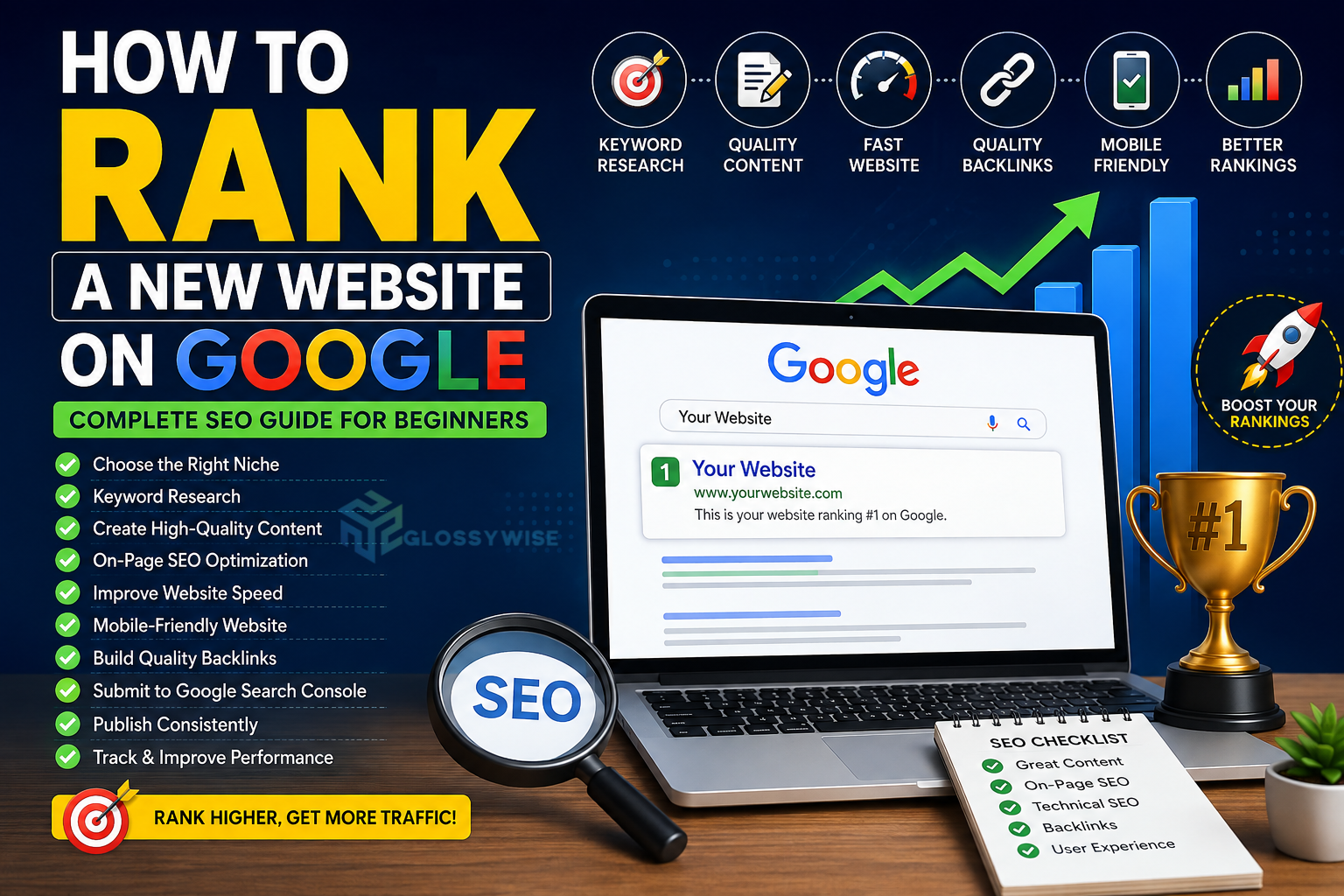
Starting a new website is exciting, but getting it to appear on Google can be challenging. Many website owners publish great content but still struggle to get traffic because they do not follow proper SEO strategies. The good news is that ranking a new website on Google is possible if you focus on the right techniques. Google rewards websites that provide helpful content, good user experience, fast performance, and trustworthy information.
You will learn how to rank a new website on Google, how long it takes, what SEO steps you should follow, and how to build a strong foundation for long-term organic traffic.
How Long Does It Take for a New Website to Rank on Google?
One of the most common questions asked by new website owners is: “How long does it take for a new website to rank on Google?” The answer depends on several SEO factors, including your website niche, keyword competition, content quality, and overall optimization strategy. In most cases, a new website may start seeing initial search traffic within 3 to 6 months if it consistently publishes helpful, SEO-optimized content and follows Google’s best practices. However, achieving strong rankings for competitive keywords can take 6 to 12 months or even longer.
You May Also Like: Image SEO Guide – How to Optimize Images for Better Google Rankings
The time required to rank a new website depends on factors such as:
- Content Quality: High-quality, original, and helpful content improves your chances of ranking higher in search results.
- Keyword Competition: Low-competition keywords are easier to rank for compared to highly competitive search terms.
- Website Authority: New websites need time to build trust and credibility with Google.
- Backlinks: Quality backlinks from trusted websites can improve your website authority and rankings.
- SEO Optimization: Proper on-page SEO, technical SEO, website speed, and mobile optimization play an important role.
- Publishing Consistency: Regularly creating valuable content helps Google recognize your website as an active and reliable source.
Instead of focusing on quick rankings, new websites should focus on building long-term authority, creating useful content, and providing the best possible experience for visitors. With consistent SEO efforts and patience, a new website can gradually achieve higher rankings and attract sustainable organic traffic.
Step 1- Choose the Right Website Niche
Choosing the right niche is the first and one of the most important steps when starting a new website. A clear and focused niche helps Google understand what your website is about and allows you to build authority in a specific topic. Many new bloggers make the mistake of creating a website that covers too many unrelated topics, such as:
Technology, health, finance, travel, cooking, and entertainment all together
Instead, focus on a specific niche where you can consistently create valuable content, such as:
- AI tools and software reviews
- Blogging and SEO guides
- Personal finance tips
- Technology tutorials
- Digital marketing strategies
A focused niche helps you attract the right audience, create relevant content, and increase your chances of ranking higher on Google.
Step 2- Perform Effective Keyword Research
Keyword research is a crucial part of SEO and plays a major role in helping a new website rank on Google. It helps you discover what people are searching for and allows you to create content that matches their needs. For a new website, you should target keywords that have good search demand but lower competition. Ranking for highly competitive keywords can be difficult when your website has low authority.
Target Long-Tail Keywords
Long-tail keywords are specific search phrases that usually contain three or more words. These keywords often have lower competition and attract visitors who are looking for exact solutions.
Examples:
- How to start a blog for beginners
- Best free AI tools for students
- How to optimize images for SEO
- Best SEO tools for small websites
Targeting long-tail keywords gives new websites a better opportunity to rank faster and attract relevant organic traffic.
Understand Search Intent Before Creating Content
Search intent means understanding the reason behind a user’s search query. Google aims to provide results that best match what users are looking for, so your content should always satisfy their intent.
There are three main types of search intent:
1. Informational Intent
Users are looking for information, answers, or explanations.
Examples:
- What is SEO?
- How does artificial intelligence work?
- What are Core Web Vitals?
To rank for informational keywords, create detailed guides, tutorials, and educational content.
2. Commercial Intent
Users are researching products, services, or comparisons before making a decision.
Examples:
- Best SEO tools for small businesses
- Canva vs Photoshop comparison
- Best web hosting providers
For these keywords, comparison articles, reviews, and buying guides work well.
3. Transactional Intent
Users are ready to take an action, such as purchasing a product or signing up for a service.
Examples:
- Buy website hosting
- Subscribe to SEO software
- Download premium tools
Creating content based on search intent helps Google understand your page better and increases your chances of ranking higher in search results.
Step 3- Create High-Quality and Helpful Content
Content is the foundation of a successful SEO strategy. Google’s goal is to provide users with the most useful and relevant information, so websites that create valuable content have a better chance of ranking higher.
High-quality content should:
- Answer the questions users are searching for
- Provide detailed and accurate information
- Offer original insights and practical solutions
- Fully cover the topic
- Solve real problems for readers
A well-optimized article should include:
- Proper heading structure (H1, H2, H3)
- Relevant examples
- High-quality images
- Frequently asked questions (FAQs)
- Updated information
- Easy-to-read formatting
Avoid publishing short, low-value articles that do not provide useful information. Instead, focus on creating comprehensive content that gives users everything they need in one place.
For a new website, publishing random topics across different categories can make it difficult for Google to understand your expertise.
Instead, create content clusters around a specific topic. This strategy helps search engines recognize your website as an authority in that subject.
For example:
Main Topic:
Complete SEO Guide
Supporting Articles:
- What Is SEO? Beginner Guide
- Keyword Research Guide
- Image SEO Guide
- On-Page SEO Guide
- Technical SEO Guide
- Internal Linking Best Practices
By creating related articles and linking them together, you show Google that your website provides complete information about a particular topic.
Step 5- Optimize Your Website for On-Page SEO
On-page SEO helps search engines understand your content and improves your chances of appearing in search results.
Important on-page SEO elements include:
Optimize Your Title Tag
Your title tag should:
- Include your main keyword
- Encourage users to click
- Match search intent
- Clearly explain what the page is about
Example:
- Website Ranking Tips
A well-optimized title can improve your click-through rate and attract more visitors from search results.
Use Proper Heading Structure
Headings help both users and search engines understand your content structure.
Follow this format:
H1:
Main article title
H2:
Main sections of your article
H3:
Supporting points under each section
Proper heading structure improves readability and makes your content easier for Google to understand.
Write SEO-Friendly Meta Descriptions
A meta description is a summary that appears below your page title in Google search results.
A good meta description should:
- Include your main keyword naturally
- Explain the benefit of your content
- Encourage users to click
Example:
“Learn how to rank a new website on Google with proven SEO strategies, including keyword research, content optimization, technical SEO, backlinks, and website speed improvements.”
Step 6: Improve Website Speed
Website speed is an important SEO factor because users expect websites to load quickly. A slow website can create a poor user experience and increase bounce rates.
You can improve website speed by:
- Compressing images
- Choosing reliable and fast hosting
- Using caching solutions
- Removing unnecessary plugins
- Using lightweight WordPress themes
- Optimizing website files
Important speed factors include:
- Page loading time
- Mobile performance
- Core Web Vitals
- Server response time
A faster website provides a better experience for visitors and can support better search rankings.
Step 7- Make Your Website Mobile-Friendly
Mobile optimization is essential because most Google searches come from smartphones.
Your website should:
- Use responsive design
- Have readable text and fonts
- Provide easy navigation
- Avoid intrusive popups
- Load quickly on mobile devices
Google uses mobile-first indexing, which means it mainly evaluates the mobile version of your website when determining rankings.
Step 8- Create a Strong Internal Linking Strategy
Internal links connect different pages on your website and help Google discover your content.
For example, your article:
“How to Rank a New Website on Google”
Can link to:
- Keyword Research Guide
- Image SEO Guide
- Technical SEO Guide
- On-Page SEO Guide
Benefits of internal linking:
- Helps search engines crawl your website
- Improves website navigation
- Increases time spent on your site
- Strengthens SEO structure
A good internal linking strategy helps distribute authority throughout your website.
Step 9- Submit Your Website to Google Search Console
Google Search Console is a free tool that helps website owners monitor and improve their search performance.
With Google Search Console, you can:
- Submit your XML sitemap
- Check website indexing status
- Monitor search keywords
- Identify SEO errors
- Analyze website performance
Every new website should connect with Google Search Console to help Google discover and understand its pages.
Step 10- Build High-Quality Backlinks
Backlinks are links from other websites that point to your website. They help Google understand that your content is valuable and trustworthy.
However, quality matters more than quantity.
Effective ways to build backlinks include:
- Writing guest posts
- Creating useful resources
- Publishing original research
- Sharing expert content
- Building relationships with other websites
Avoid buying spam backlinks because low-quality links can harm your website rankings and trust.
Step 11- Update Your Content Regularly
SEO is an ongoing process, not a one-time task. Google prefers websites that provide fresh and updated information.
Regularly improve your existing articles by:
- Adding new information
- Updating outdated statistics
- Improving examples
- Replacing old screenshots
- Fixing broken links
Content updates can help maintain rankings and improve your position in search results.
Step 12- Promote Your Content
Publishing content is only the first step. To increase visibility, you should actively promote your articles.
You can share your content through:
- Facebook groups
- Reddit communities
- Email newsletters
- Online communities
Content promotion helps attract visitors, increase engagement, and generate natural backlinks that support long-term SEO growth.
Common SEO Mistakes New Websites Should Avoid
Starting a new website requires more than just publishing content. Many beginners make SEO mistakes that prevent their websites from ranking higher on Google, even when they create useful articles.
Avoiding these common SEO mistakes can help your website grow faster, improve search visibility, and build long-term organic traffic.
1. Targeting Highly Competitive Keywords
One of the biggest mistakes new websites make is trying to rank for extremely competitive keywords.
Established websites already have strong domain authority, thousands of backlinks, and years of content, making it difficult for a new website to compete.
Instead of targeting broad keywords, focus on low-competition and long-tail keywords that have a better chance of ranking.
For example:
- SEO
- Best SEO tools for beginners
- Weight loss
- How to lose weight naturally at home
Targeting specific keywords helps new websites attract relevant visitors and achieve faster SEO results.
2. Publishing Low-Quality Content
Many website owners believe that publishing more articles automatically leads to better rankings. However, Google focuses on content quality rather than quantity.
Publishing short, incomplete, or copied content can negatively affect your website performance.
High-quality content should:
- Provide accurate information
- Answer user questions
- Include practical examples
- Be original and helpful
- Cover the topic in detail
Instead of publishing many low-value articles, focus on creating fewer but more valuable pieces of content that genuinely help readers.
3. Ignoring Technical SEO
Technical SEO plays an important role in helping search engines crawl, understand, and rank your website.
Ignoring technical problems can negatively impact your rankings and user experience.
Common technical SEO issues include:
- Slow website loading speed
- Broken links
- Poor mobile optimization
- Missing sitemap
- Indexing problems
- Incorrect website structure
Regularly checking and fixing technical SEO issues helps ensure that Google can properly access and rank your website pages.
4. Not Being Consistent With SEO Efforts
SEO is a long-term strategy, and many new websites fail because they expect immediate results.
Building website authority, gaining rankings, and increasing organic traffic takes time and consistent effort.
Successful websites usually:
- Publish content regularly
- Update old articles
- Monitor SEO performance
- Improve user experience
- Build quality backlinks
Consistency helps Google recognize your website as an active and trustworthy source of information.
Remember, SEO success does not happen overnight. A consistent approach combined with quality content can help your website achieve sustainable growth over time.
SEO Checklist for a New Website
Before launching your website and publishing content, make sure you complete these important SEO steps. A proper SEO foundation helps Google understand your website, improves visibility, and increases your chances of ranking higher in search results.
Use this checklist to optimize your new website:
Choose a Clear Website Niche
Select a specific topic and create content around it to build authority and attract the right audience.
Research Target Keywords
Find keywords that your audience is searching for and focus on low-competition terms that are easier to rank for.
Create Helpful and High-Quality Content
Publish original, detailed, and valuable articles that answer user questions and solve their problems.
Optimize Titles and Meta Descriptions
Create SEO-friendly titles and descriptions that include your target keywords and encourage users to click.
Add Internal Links
Connect related articles on your website to improve navigation and help Google discover your content.
Improve Website Speed
Optimize images, use reliable hosting, and remove unnecessary elements to create a faster browsing experience.
Make Your Website Mobile-Friendly
Ensure your website works properly on smartphones and provides a smooth user experience.
Submit Your Sitemap to Google
Connect your website with Google Search Console and submit your XML sitemap for better indexing.
Build Quality Backlinks
Earn links from trusted websites to improve your website authority and credibility.
Update Old Content Regularly
Refresh existing articles with new information, updated examples, and improved SEO optimization.
Frequently Asked Questions
How Can I Rank My New Website on Google Fast?
A new website can improve its chances of ranking faster by targeting low-competition keywords, publishing helpful content consistently, optimizing on-page SEO, improving website speed, and building authority through quality backlinks. However, SEO takes time, and focusing on long-term growth is more effective than trying to achieve instant rankings.
Can a New Website Rank on Google Without Backlinks?
Yes, a new website can rank on Google without backlinks, especially for low-competition keywords.
However, backlinks from trusted and relevant websites can help increase your website authority, improve credibility, and support higher rankings over time.
How Many Articles Should a New Website Publish?
There is no fixed number of articles required for ranking. Content quality is more important than quantity.
Publishing around 2 to 4 detailed and well-optimized articles per week can help a new website build topical authority and increase organic traffic.
Why Is My New Website Not Showing on Google?
There are several reasons why a new website may not appear in Google search results:
- Your website has not been indexed yet
- Content quality is not strong enough
- The website is too new
- SEO optimization is incomplete
- Technical SEO issues are preventing crawling
Using Google Search Console can help identify and fix indexing problems.
What Is the Easiest Way to Rank a New Website?
The easiest way for a new website to rank is by targeting specific long-tail keywords and creating better, more useful content than existing competitors.
Focus on:
- Low-competition topics
- Detailed guides
- User-focused content
- Proper SEO optimization
Does Website Age Affect Google Rankings?
Website age can influence trust, but it is not the most important ranking factor.
Google mainly focuses on:
- Content quality
- Website authority
- User experience
- SEO optimization
- Backlink quality
A new website can compete with older websites by creating better and more helpful content.
The best approach is to use both SEO and social media together.
SEO helps you build long-term organic traffic from search engines, while social media helps promote your content, attract visitors, and increase brand awareness.
Conclusion
Ranking a new website on Google requires a combination of high-quality content, proper SEO optimization, technical improvements, and consistent effort.
The most important steps include choosing the right niche, targeting valuable keywords, creating helpful content, improving website performance, building authority, and providing a great user experience. A new website may not rank immediately, but with a consistent SEO strategy and patience, you can gradually increase your organic traffic, improve search rankings, and build a successful online presence.
